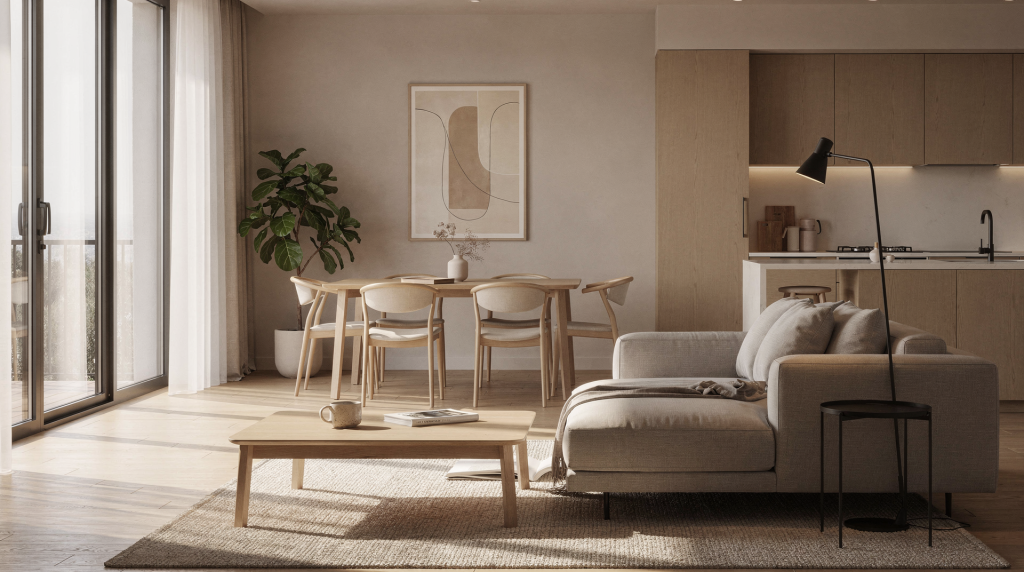
A warm minimalist apartment works best when it feels calm first and styled second. The goal is not to create an empty room with a few neutral objects, but a home that supports daily routines, stores real life neatly, and still feels inviting at the end of the day.
Minimalism can look cold when it relies too heavily on white walls, glossy finishes, and too little texture. Warm minimalism solves that by using softer materials, restrained color, better lighting, and furniture that earns its place.
What Makes a Warm Minimalist Apartment Different
Warm minimalism keeps the clean lines and visual order of classic minimalism, but softens the result with natural materials and a more relaxed palette. It usually relies on warm-toned neutrals, wood, linen, wool, and layered lighting rather than high-contrast decor.
The difference matters because most apartments are lived in, not staged. A space that looks beautiful in photos can still feel uncomfortable if it lacks storage, softness, or enough light for evening use. I’ve walked into enough homes that photographed beautifully but felt hollow to know that warmth isn’t a decorative afterthought — it’s structural. When a room has the right materials and light, you feel it immediately. Your shoulders drop. The space holds you.
In simple terms
- Minimalism controls visual noise.
- Warmth makes the space feel human.
- Everyday living decides whether the apartment actually works.
The Design Principles That Matter Most
A good warm minimalist apartment is built from the largest decisions down to the smallest details. That order keeps the space calm and avoids random buying — the kind that happens when you’re trying to fix a room that never felt right in the first place.
1. Start with the room’s main surfaces
Walls, flooring, and large furniture set the tone. If those elements are too cool or too stark, every accessory has to work harder. I’ve seen people layer throw after throw on a sofa trying to compensate for icy white walls and grey-washed floors. It rarely works. The foundation has to carry the warmth first.
Choose finishes that already feel warm:
- Soft white instead of bright white
- Beige, taupe, mushroom, or greige
- Light oak, ash, walnut, or similar wood tones
- Matte or brushed finishes rather than shiny ones
2. Use texture to create depth
Texture is what keeps a minimalist room from feeling flat. A space can stay visually quiet and still feel rich if it mixes a few tactile surfaces. This is something I learned handling textiles for years — a room with only smooth surfaces reads as unfinished, no matter how expensive the pieces are. The eye needs somewhere to rest, and the hand wants something to graze against.
Good warm-minimal combinations include:
- Linen curtains with a wool rug
- A smooth sofa with a nubby throw
- Wood furniture with ceramic or stone accessories
- Upholstery with slightly rounded shapes
3. Keep the palette limited
Warm minimalism is not about lots of color. It works best with a narrow range of tones that repeat across the apartment. When you walk from room to room and the same quiet language follows you, the whole home feels intentional rather than decorated.
A simple formula:
- 60% dominant warm neutral
- 30% supporting neutral
- 10% accent through wood, metal, or one deeper earthy tone
How to Plan the Apartment Room by Room
A warm minimalist apartment feels cohesive when each room follows the same logic, even if the function changes. The materials and palette should travel, but the mood can shift — a living room can feel more social, a bedroom more cocooning, a kitchen more crisp.
Living room
The living room should feel open enough for movement and closed enough to feel settled. This is usually the hardest room to get right because it serves so many purposes: conversation, reading, napping, sometimes eating. The furniture needs to handle all of that without looking like a showroom.
Focus on:
- A sofa with clean lines and comfortable depth
- One substantial rug that anchors the seating area
- A coffee table with storage or an easy-to-clear top
- One or two large art pieces instead of many small ones
- Lighting that can shift from task to evening mood
Avoid overcrowding the room with accent chairs, side tables, and decorative objects that do not serve a clear purpose. I’d rather see one good armchair pulled up to the sofa than three spindly ones nobody uses.
Bedroom
The bedroom should feel quieter than the living room. This is usually where warm minimalism works best — there’s less pressure to entertain, and the room’s purpose is inherently restful. When I style bedrooms, I think about the moment you walk in at the end of a long day. The bed should look like it’s waiting for you, not like it’s on display.
Use:
- Layered bedding in cotton, linen, or brushed blends
- One upholstered headboard or a simple wood frame
- Bedside lighting with soft glow
- Closed storage where possible
- A restrained color palette with a slightly softer touch
If the room feels flat, add texture before adding more objects. A heavy linen bedspread or a chunky wool throw at the foot of the bed does more than another decorative pillow ever could.
Kitchen
A warm minimalist kitchen is mostly about restraint and visible order. Kitchens collect clutter faster than any other room — mail, keys, shopping lists, small appliances. The goal is to keep the counters clear enough that the eye can breathe, but not so bare that cooking feels like a disruption.
Look for:
- Streamlined cabinet fronts
- Warm metal accents such as brass or bronze
- Wood cutting boards or bowls used as functional decor
- Clear counters with only daily essentials out
- Under-cabinet or task lighting that feels practical, not harsh
Entryway
The entry should work hard because it handles the most transition. It’s the first thing you see when you come home and the last thing you touch before leaving. Even a tiny entry deserves attention — a slim console, a mirror, and a place to drop keys can make the difference between walking into chaos and walking into calm.
Include:
- A slim console or wall-mounted shelf
- A hook rail or hidden storage for outerwear
- A tray or bowl for keys and small items
- A mirror to expand light
- One grounding object, such as a lamp or a vase
Materials That Make the Style Work
Warm minimalism depends on materials more than decoration. If the materials are right, the room needs less styling. This is something I came to understand after years of sourcing textiles and decor — the pieces that did the most work in a room were rarely the most decorative. They were the ones with weight, texture, and an honest material quality.
| Material | Why it works | Best use |
|---|---|---|
| Linen | Softens sharp lines and adds relaxed texture | Curtains, throws, bedding |
| Wool | Adds warmth and acoustic softness | Rugs, blankets, cushions |
| Solid wood | Brings visual weight and natural warmth | Tables, shelving, frames |
| Ceramic | Feels handmade and calm | Vases, bowls, lamps |
| Stone or stone-look surfaces | Adds quiet contrast | Trays, countertops, decorative objects |
| Brass or bronze | Warms up the palette without clutter | Hardware, lighting, small accents |
A useful rule: if every surface is smooth and cool, the apartment will likely feel unfinished. Mix in at least a few tactile elements. Run your hand over the surfaces in your room right now — if everything feels the same, that’s your answer.
Lighting: The Fastest Way to Change the Mood
Lighting often decides whether a minimalist apartment feels inviting or clinical. One overhead light is rarely enough. I’ve walked into rooms where the furniture was perfect and the palette was beautiful, but a single harsh ceiling fixture made the whole space feel like a waiting room. Lighting is the easiest thing to fix and the most often overlooked.
Use three layers:
- Ambient light for general brightness
- Task light for reading, cooking, and working
- Accent light for evening atmosphere
Practical tips:
- Choose bulbs in the warm range rather than stark daylight tones
- Add table lamps to soften corners
- Use floor lamps to create height in larger rooms
- Consider dimmers where possible
- Avoid relying only on ceiling fixtures
If a room feels harsh, the problem is often lighting, not decor. Before you buy anything else, change the bulbs and add one lamp to a dark corner. You might be surprised how much the room shifts.
Storage and Everyday Function
A warm minimalist apartment only works if daily clutter has a place to go. The style depends on clear surfaces, but that should come from storage systems, not constant tidying. There’s a difference between a home that’s been hastily cleared for guests and one where everything naturally has a home. The first feels tense. The second feels easy.
Best storage ideas for apartment living
- Ottomans with hidden storage
- Coffee tables with shelves or drawers
- Closed cabinets instead of open shelving everywhere
- Under-bed storage in smaller bedrooms
- Matching baskets for soft items
- A “drop zone” near the entry for everyday carry items
What should stay visible
Keep visible only what is either useful or genuinely decorative:
- A lamp
- A stack of books
- One tray with essentials
- A vase or sculptural object
- A blanket or throw used daily
Everything else should have a reason to stay out. If you’re not sure, put it away for a week. If you don’t miss it, it doesn’t need to be visible.
Common Mistakes to Avoid
Warm minimalism is easy to get wrong because people often remove too much rather than style with intention. An empty room is not the same as a calm one. Calm comes from the right things being present, not from everything being absent.
Mistake 1: Making everything beige
A room with only one flat neutral can look lifeless. Use variation in tone and texture so the space has dimension. Think of it like a good linen — it’s never one flat color. There are slubs, variations, shadows. Your room should have that same depth.
Mistake 2: Choosing furniture that is too small
Tiny furniture can make a room feel underfurnished and awkward. In a minimalist apartment, a few well-scaled pieces work better than many small ones. A sofa that’s too short for the wall or a rug that floats in the middle of the floor will always feel temporary, no matter how beautiful the pieces are individually.
Mistake 3: Using too many decorative objects
Minimalism collapses when every surface becomes a display shelf. Keep accessories edited and repeat materials instead of adding more categories. If you have ceramic, wood, and linen already in the room, you don’t need to introduce glass, metal, and resin just for variety. Restraint is the point.
Mistake 4: Ignoring lighting
Even the best room can feel cold at night if the light is too blue or too bright. Soft, layered lighting is non-negotiable. I’ve seen beautifully furnished apartments that felt unlivable after sunset because the only light source was a cool-toned overhead fixture. That’s not a design problem you solve with more decor.
Mistake 5: Forgetting comfort
A beautiful chair that no one wants to sit in is a design mistake, not a statement piece. Everyday living should always win over pure visual discipline. If your sofa looks stunning but you always choose the floor, something is wrong. Comfort isn’t a compromise — it’s the whole point of a home.
How to Build the Look Without Starting Over
Most apartments do not need a full redesign. They need a better editing process. I’ve worked with enough renters and first-time homeowners to know that you rarely have the budget or permission to change everything. What you do have is the ability to make better choices about what stays and what goes.
Step-by-step approach
- Clear the room and remove anything without a real purpose.
- Decide on a small palette of warm neutrals.
- Keep the largest furniture pieces simple and well scaled.
- Add one or two natural textures per room.
- Replace harsh lighting with softer layers.
- Store visible clutter in closed containers or furniture.
- Add art and objects only after the room feels balanced.
This sequence works because it solves the structure first and styling second. Too many people buy art and accessories hoping they’ll fix a room that never felt right. Start with the bones. The rest will follow.
Quick Checklist for a Warm Minimalist Apartment
- Neutral palette with warmth, not stark white
- Natural materials repeated across rooms
- Comfortable, scaled furniture
- Layered lighting
- Clear surfaces with hidden storage
- A few meaningful decorative objects
- Soft textiles in everyday use
- No visual clutter competing for attention
A Practical Example
Imagine a small city apartment with a living room, one bedroom, and an open kitchen.
The living room uses a beige sofa, a wool rug, an oak coffee table, and two lighting sources instead of one ceiling fixture. The bedroom keeps the same wood tone and adds linen bedding in layered neutrals. The kitchen stays mostly clean, with only a cutting board, kettle, and a ceramic bowl visible.
Nothing is overstyled, but the home feels complete because the materials and tone repeat from room to room. Walk from the living room to the bedroom and nothing jars. That continuity is what makes a small apartment feel larger and more considered — your eye moves smoothly instead of stopping at every change in color or material.
FAQ
What is warm minimalism in interior design?
Warm minimalism is a pared-back decorating style that keeps spaces calm and uncluttered while using warm neutrals, natural materials, and soft lighting to make the room feel inviting. It’s minimalism with a pulse — edited but not cold, simple but not stark.
How do you make a minimalist apartment feel cozy?
Use texture, layered lighting, and a small set of warm materials such as wood, linen, and wool. Comfort usually comes from tactility and light, not from adding more decor. A single wool throw over a linen sofa can do more than a shelf full of objects.
Can warm minimalism work in a small apartment?
Yes. In fact, it often works better in small apartments because it reduces visual noise, makes storage easier, and helps the space feel more open. When every item has a reason to be there, a studio apartment can feel twice its size.
What colors suit a warm minimalist apartment?
Soft white, beige, greige, taupe, mushroom, sand, and muted earthy tones work well. The key is consistency and slight variation, not contrast for its own sake. Think of the palette as a quiet conversation rather than a statement.
Is warm minimalism expensive to achieve?
Not necessarily. The style depends more on editing and material choice than on buying high-end items. A few well-chosen textiles, a good lamp, and one strong wood piece can change the feel of a room. Some of the warmest apartments I’ve seen were furnished with vintage finds and simple linen, not designer pieces.
Final Thought
A warm minimalist apartment is successful when it supports ordinary life without looking overworked. The best versions feel calm in the morning, practical during the day, and soft at night — a home that is pared back, but never cold. That’s the balance worth chasing: enough restraint to feel clear-headed, enough warmth to feel held.