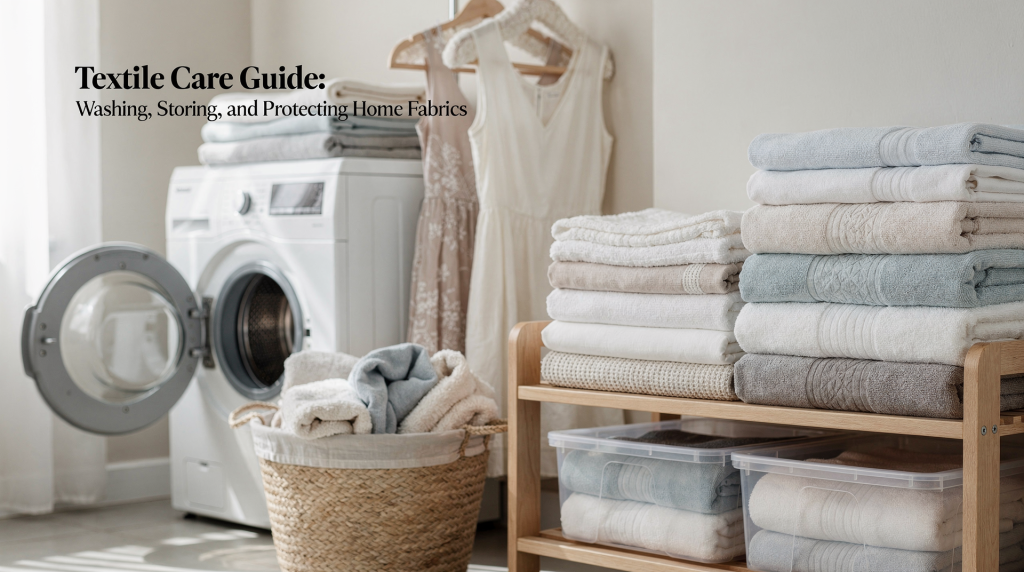
Home textiles do more than soften a room. They absorb light, dust, moisture, body oils, and daily wear, which means they need a care routine that is practical, not precious. The right washing, storage, and protection habits can extend the life of linen, cotton, wool, silk, and blended fabrics by years.
If you own throws, curtains, pillow covers, table linens, or upholstery accents, this guide will help you care for them without guesswork. I’ve learned these methods through years of handling fabrics in real homes — from studio apartments where a single linen throw does double duty as a sofa cover and evening wrap, to country houses where wool blankets get rotated by season. The principles stay the same; only the frequency changes.
Why textile care matters
Fabric fails in predictable ways: fibers weaken from harsh washing, colors fade from heat and sunlight, natural fibers grow musty in damp storage, and pests target neglected items. Clean, dry, cool, and well-ventilated storage is the safest baseline for most home textiles, while damp basements, hot attics, and overcrowded cupboards create avoidable damage.
The goal is not to treat every piece like an heirloom. It is to match the care method to the fiber, the construction, and how often the item is used. A cotton pillowcase you sleep on every night needs a different rhythm than a silk cushion cover that lives on a chair no one sits in. Understanding that distinction is what keeps fabrics functional rather than fragile.
Start with the care label
Before anything goes into a machine, check the label. It tells you whether the textile can be washed, needs dry cleaning, or should be hand-washed. When labels are missing — common with vintage finds or handmade pieces — treat delicate natural fibers conservatively. I’ve seen too many beautiful wool throws come out of the wash half their original size because someone guessed wrong.
Use this quick rule:
- If the item is everyday and washable, clean it regularly on a gentle cycle.
- If the item is structured, embellished, lined, or heavily dyed, be cautious.
- If the item has wool, silk, embroidery, or trim, test before washing.
Testing means dabbing a hidden corner with cool water and a drop of your detergent, then blotting to see if color transfers. It takes thirty seconds and can save a piece you love.
Washing home textiles the right way
Linen
Linen handles washing well, but it dislikes unnecessary stress. This is the fiber I recommend most often for high-use areas precisely because it softens with age rather than wearing out — provided you don’t overwork it in the machine.
Best practice:
- Use cold or lukewarm water
- Choose a mild detergent
- Select a gentle cycle
- Avoid overloading the washer
- Air-dry when possible
Linen wrinkles easily, so don’t treat wrinkles as a failure. They are part of the fiber’s character. In fact, a linen curtain that hangs with soft, lived-in creases often looks more intentional than one pressed to perfection. If you want a crisper finish for table linens, iron while still slightly damp — but for throws and pillow covers, I’d argue the texture is the point.
Cotton
Cotton is usually the most forgiving household fabric, but it still benefits from moderation. The difference between a cotton throw that lasts five years and one that lasts fifteen often comes down to whether it was routinely blasted with high heat.
Best practice:
- Wash in cool to warm water unless the care label says otherwise
- Use a regular or gentle cycle depending on weight
- Separate darks and lights
- Avoid heavy bleach use
- Tumble dry on low only when needed
Cotton table linens, pillow covers, and lightweight curtains are often fine in the machine, but dense weaves and dyed cotton can shrink or fade if treated too aggressively. I’ve learned to wash dark cotton separately for the first few cycles — indigo and deep greens are notorious for releasing dye long after you’d expect them to stop.
Wool
Wool is durable, but only if you avoid heat and friction. A well-cared-for wool blanket can outlast most other textiles in your home, which is why you’ll find them in family cabins and inherited linen closets decades after purchase.
Best practice:
- Use cold water
- Use detergent made for wool or delicates
- Wash on a gentle cycle or by hand
- Minimize agitation
- Reshape while damp
- Dry flat
Wool felts when the fibers rub together under heat and moisture. That is why a hot wash or rough spin can ruin a throw or blanket fast. The transformation is irreversible — once those fibers lock together, no amount of stretching will bring back the original drape. If you’re washing wool by hand, think of it as soaking rather than scrubbing.
Silk and delicate fabrics
Silk, velvet, and decorative blends need a lighter touch. These are the pieces that make a room feel considered — a silk cushion on a reading chair, a velvet throw draped at the foot of the bed — but they’re also the ones most likely to be damaged by well-meaning cleaning.
Best practice:
- Check whether dry cleaning is recommended
- If washable, hand-wash in cool water with a delicate detergent
- Do not wring
- Dry away from direct sun
- Keep heat low and brief
If a piece is decorative rather than functional, think twice before washing it at home. Sometimes spot cleaning is safer. I keep a small bottle of delicate detergent and a clean white cloth in the laundry cupboard specifically for this — dab gently, don’t rub, and let it air dry before deciding if more intervention is needed.
Washing method by fabric: quick reference
| Fabric | Best water temperature | Detergent | Drying method | Main risk |
|---|---|---|---|---|
| Linen | Cold to lukewarm | Mild detergent | Air dry or low heat if necessary | Stress, shrinkage, heavy wrinkling |
| Cotton | Cool to warm | Standard detergent | Low tumble or line dry | Fading, shrinkage |
| Wool | Cold | Wool/delicate detergent | Dry flat | Felting, distortion |
| Silk | Cool | Delicate detergent | Air dry in shade | Water marks, weakening |
| Blends | Follow the most delicate fiber | Mild detergent | Gentle drying | Unexpected shrinkage |
Blends are the wild cards. A cotton-linen blend will behave mostly like linen, but a wool-silk blend needs the caution you’d give silk. When in doubt, default to the more delicate fiber’s requirements — you can always adjust next time if the fabric proves hardier than expected.
Common washing mistakes to avoid
Many fabric problems come from routine habits, not accidents. Over the years, I’ve noticed the same patterns repeating in homes I visit: towels that smell musty because they were folded before fully drying, cushion covers that shrank because the dryer ran too hot, linen that feels stiff from detergent buildup.
Avoid these:
- Using too much detergent, which leaves residue in fibers
- Packing the washer too full, which causes abrasion
- Washing everything on the same cycle
- Using high heat to “speed things up”
- Ignoring stains until they set permanently
- Drying dark fabrics in direct sun for long periods
A fabric that looks clean may still hold body oils, dust, or food residue. Those residues attract odors, insects, and mildew over time. This is especially true for throws that live on sofas — they absorb everything from cooking smells to pet dander, even if they look spotless. A quick sniff test usually tells you more than a visual check.
How to dry textiles safely
Drying is where many good wash cycles go wrong. I’ve rescued more than one piece that was perfectly washed but then stretched out of shape on a hanger or baked stiff in a hot dryer.
Safer methods:
- Air dry flat for wool and heavy knits
- Hang lightweight cotton and linen in a well-ventilated area
- Use low heat only when the label allows it
- Remove items while slightly damp to reduce over-drying
- Keep textiles out of harsh direct sunlight
For throws and blankets, flat drying prevents stretching. For curtains and pillow covers, drying on a line can help the fabric keep its shape. If you’re drying indoors during winter, make sure the room has airflow — a dehumidifier or cracked window makes a real difference to how quickly and evenly fabric dries.
Storing home fabrics properly
Good storage is about protecting textiles from moisture, light, dirt, and pests. The way you store off-season bedding or spare curtains determines whether they emerge fresh and ready to use or musty and compromised.
The best storage conditions
Choose a space that is:
- Cool
- Dry
- Dark
- Clean
- Well ventilated
- Stable in temperature and humidity
Avoid:
- Attics
- Basements
- Garages
- Damp cupboards
- Areas near pipes or radiators
These spaces are vulnerable to heat swings, condensation, mold, and insect activity. I’ve opened storage boxes in attics to find fabric that looked fine on top but was mildewed underneath where it touched the box — a reminder that what surrounds the textile matters as much as the textile itself.
What to use for storage
Use:
- Acid-free tissue paper
- Clean unbleached cotton muslin
- Breathable boxes or closed cabinets in stable conditions
- Clean shelves or drawers lined with fabric
Avoid:
- Storing textiles dirty
- Packing items tightly
- Using damp or scented storage materials
- Wrapping fabrics in ways that trap moisture
Airtight plastic can be risky for long-term storage if the fabric is not completely dry, because condensation has nowhere to go. I prefer cotton storage bags or breathable boxes for anything I’m not accessing regularly. If you do use plastic bins, leave them slightly open in a dry environment, and check the contents after the first week to make sure no moisture has built up.
How to fold, roll, and stack textiles
The way you store a fabric matters almost as much as where you store it. Different methods suit different fibers and different storage spaces.
Fold when:
- The item is sturdy
- You need compact storage
- The fabric does not crush easily
Roll when:
- You want to reduce crease lines
- The textile is long and flexible
- You are storing runners, scarves, or light throws
Stack with care when:
- Items are flat and clean
- You use tissue between layers
- You keep heavier pieces on the bottom
For linen and cotton, folding is usually fine. For wool blankets, avoid sharp creases in the same place every season. Change the fold lines occasionally. I rotate my wool throws by refolding them slightly off-center each time I put them away — a small habit that prevents permanent crease marks from forming along the same fibers year after year.
Protecting fabrics from moths, mildew, and dust
Moths
Clothes moths are attracted to natural fibers, especially when textiles hold body oils or food residue. Clean storage areas help reduce the risk. I’ve learned that moth damage often starts in the least-disturbed corners of a closet — behind stacked blankets, inside folded curtains that haven’t been moved in months.
Do this:
- Wash or dry-clean items before storage
- Vacuum storage areas regularly
- Keep closets free of dust, cobwebs, and pet hair
- Inspect stored fabrics occasionally
- Air out items before use
Do not rely on a “set it and forget it” approach. Pest damage starts quietly. By the time you see the holes, the moths have likely been active for weeks. Regular disturbance — opening cupboards, shaking out blankets, moving stacks — is one of the simplest deterrents.
Mildew
Mildew grows where moisture lingers. It doesn’t take much: a humid summer, a poorly ventilated cupboard, a blanket folded before it was completely dry.
Prevention:
- Store only fully dry textiles
- Do not pack items in damp rooms
- Avoid sealing in moisture
- Recheck seasonal storage after weather changes
- Keep fabrics elevated off cold floors
If a fabric smells musty, it needs attention before it goes back into circulation. Air it outside on a dry, breezy day if possible — sunlight and airflow are surprisingly effective at neutralizing mild mustiness, though they won’t replace a proper wash if the odor is deep-set.
Dust
Dust dulls fabric color and wears fibers over time. It’s abrasive in a way that’s easy to overlook until you compare a protected piece with one that’s been exposed for years.
Protection:
- Cover rarely used textiles with clean cotton
- Shake out throws and blankets occasionally
- Vacuum upholstered fabric with a soft brush attachment
- Keep windows and vents clean in textile-heavy rooms
A weekly shake-out of throws and a monthly vacuum of curtain headers goes a long way. These are the kinds of small habits that feel fussy at first but become automatic — and they genuinely extend the life of the fabrics you’ve chosen for your home.
Seasonal textile care checklist
Use this at the start and end of each season. I keep a version of this list taped inside my linen cupboard door — it turns what could be an overwhelming task into a straightforward afternoon.
- Wash or dry-clean textiles before storing them
- Make sure everything is completely dry
- Repair loose seams, buttons, or weak hems
- Remove any visible stains
- Line storage boxes with clean muslin or acid-free tissue
- Store in a cool, dry, dark place
- Label boxes by fabric and season
- Check for odors, insects, or moisture every few months
Labeling is the step most people skip, and it’s the one that saves the most time later. A simple tag with “winter wool throws” or “summer linen curtains” means you won’t have to open every box to find what you need when the seasons shift.
How to care for specific home textiles
Throws and blankets
- Wash only when needed, not after every use
- Brush off dust regularly
- Air out between seasons
- Fold differently each time to avoid permanent creases
A throw that lives on the back of a sofa doesn’t need weekly washing — it needs occasional airing and a good shake. Save the full wash for when it’s visibly soiled or has absorbed cooking odors. Over-washing wears out fibers faster than almost anything else.
Curtains
- Vacuum lightly before washing
- Check for sun fading near the top edge
- Wash or dry-clean based on fiber and lining
- Rehang while slightly damp if the fabric allows it
Sun fading is often uneven — the top edge near the rod and the leading edge that catches afternoon light will fade first. There’s not much you can do to reverse it, but rotating panels or using a lining can slow the process. When you take curtains down for washing, note which panel hung where so you can rotate them when you rehang.
Pillow covers
- Wash more often than heavy textiles
- Treat stains quickly
- Zip or button fully before washing
- Dry thoroughly before storing
Pillow covers collect face oils, hair products, and whatever drifts through the air in your bedroom or living room. They need more frequent washing than throws, but the same gentle approach applies. Always close zippers and buttons completely — open hardware can snag other items in the wash.
Table linens
- Pretreat food stains quickly
- Avoid hot water on stains until you know the fiber
- Store flat when possible
- Use tissue between layers for delicate pieces
Hot water sets protein-based stains like egg or dairy, so resist the urge to blast a napkin with heat before you’ve identified what spilled. Cold water and a gentle stain treatment applied promptly will handle most dinner-party accidents.
When to repair instead of replace
Small damage is worth fixing early. A loose hem on a linen curtain or a weak seam on a pillow cover isn’t a sign that the piece is failing — it’s a sign that it’s been used and loved, and it’s asking for a little attention.
Repair if you notice:
- Loose hems
- Open seams
- Weak edges
- Missing closures
- Small snags
A simple repair can stop a tear from growing during the next wash or season of storage. Waiting usually makes the damage harder to reverse. I keep a small sewing kit in the same cupboard as my stored textiles — needle, thread in neutral colors, a few spare buttons — so repairs happen in the moment rather than becoming a project I’ll get to eventually.
A simple textile care routine that actually works
- Sort textiles by fiber and use.
- Check labels before washing.
- Wash gently, with the least heat that gets the job done.
- Dry completely.
- Store only clean, dry items.
- Keep storage cool, dark, and dry.
- Inspect for dust, dampness, and pests every season.
This routine is enough for most households. You do not need museum-level conservation to keep home fabrics in good shape. You do need consistency. The homes where textiles look and feel best aren’t the ones with the most expensive pieces — they’re the ones where someone pays attention, season after season, to the simple things: washing gently, drying thoroughly, and putting things away with care.
FAQ
How often should home textiles be washed?
Wash depends on use. Pillow covers and table linens need more frequent cleaning than throws, blankets, or decorative textiles. A pillowcase you sleep on might need weekly washing; a wool throw used occasionally might need it once a season. Let use and common sense guide the rhythm.
Is air drying better than machine drying?
Yes, for most natural fibers. Air drying is gentler and reduces shrinkage, especially for linen and wool. It also uses less energy and gives you more control over the final result. The trade-off is time and space, but a folding drying rack handles most household textiles without dominating a room.
Can I store textiles in vacuum bags?
Only with caution. Vacuum storage can compress fibers and trap moisture if the item is not fully dry. For short-term storage of sturdy synthetics, they can work. For natural fibers or long-term storage, breathable options are safer.
What is the safest place to store blankets and seasonal fabrics?
A cool, dry, dark, well-ventilated closet or cabinet is usually safest. Avoid attics, basements, and garages. If your only option is a less-than-ideal space, use breathable containers and check on the contents more frequently.
How do I know if a textile is too delicate to wash at home?
If it is silk, heavily embellished, lined, structured, or labeled dry clean only, home washing may not be worth the risk. When in doubt, consult a dry cleaner you trust — and be specific about what the piece is and what you’re concerned about.
What should I do if stored fabric smells musty?
Air it out immediately, check for dampness, and clean or rewash if the fiber allows it. Musty odor usually means moisture has been present too long. Sunlight and fresh air are your first line of defense; a wash follows if the smell persists.
Final takeaway
The best textile care is simple: wash gently, dry fully, store smart, and inspect regularly. If you protect fabrics from heat, moisture, dirt, and pests, they will look better, feel better, and last far longer in everyday life. These aren’t museum pieces — they’re the throws you wrap around your shoulders on cool evenings, the curtains that filter morning light, the pillow covers that soften a rented sofa. Treat them with a little consistency and they’ll reward you with years of quiet, comfortable service.