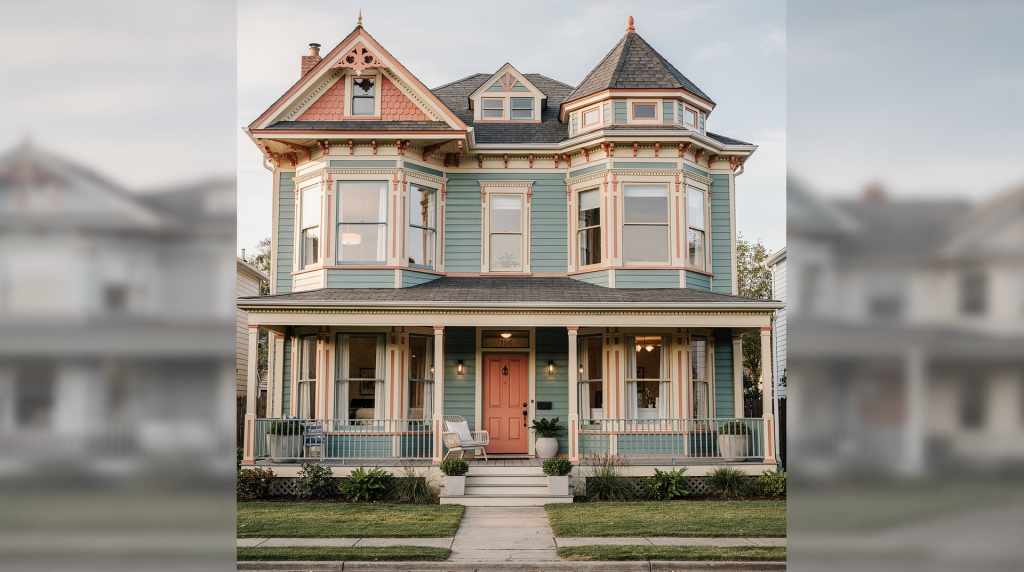
A Victorian house does not have to feel dark, fussy, or museum-like. When color, layout, and materials are handled with restraint, the result can be a home that keeps its period character while feeling easy to live in every day.
This home tour focuses on how a colorful Victorian house can be updated for modern life without flattening its personality. It is the kind of project that works especially well in English homes, where original details, smaller room proportions, and a strong sense of history can become assets rather than problems.
What makes a Victorian house work today?
Victorian houses are known for their ornate architecture, tall ceilings, bay windows, fireplaces, molding, and often a series of more enclosed rooms rather than one open-plan space. That layout can feel formal, but it also gives each room a clear purpose.
The key to making a Victorian home feel current is not stripping out the character. It is balancing the old structure with better circulation, practical storage, and a color scheme that feels intentional rather than overwhelming.
The best modern updates usually do three things
- Improve daily comfort without erasing original features.
- Make the layout easier to use for cooking, relaxing, and entertaining.
- Add personality through color, texture, and lighting instead of expensive structural changes.
A practical design formula for a colorful Victorian house
If you are trying to create this look in your own home, the most reliable approach is simple: keep the architecture visually readable, then layer in modern comfort through finishes and furniture.
| Design element | What to keep | What to modernize | Why it matters |
|---|---|---|---|
| Walls and trim | Cornicing, ceiling roses, skirting boards, paneling | Paint in richer or softer contemporary colors | Preserves character while making rooms feel fresh |
| Floors | Original boards, tiled halls, stairs | Restore, sand, or refinish | Grounds the scheme and adds authenticity |
| Lighting | Period proportions, statement fixtures | Add layered lighting and dimmers | Victorian rooms often need more flexible light |
| Furniture | One or two antique or classic pieces | Mix with simpler contemporary shapes | Stops the room from feeling too heavy |
| Soft furnishings | Pattern and texture | Use modern fabrics and cleaner silhouettes | Adds comfort without visual clutter |
Color: how to use it without making the house feel chaotic
A colorful Victorian home usually works best when the palette is controlled room by room. That does not mean every room must be neutral. It means each color should have a reason to be there.
Good Victorian-inspired schemes often use:
- Deep greens, oxblood, navy, plum, and ochre for richness.
- Dustier shades like sage, clay, muted pink, and warm stone for softness.
- Accent colors in art, cushions, lampshades, and rugs rather than everywhere at once.
A useful rule
Choose one dominant color, one supporting neutral, and one accent tone for each main room. If all three fight for attention, the room will feel busy instead of layered.
Common mistakes with color
- Using too many saturated tones in adjacent rooms.
- Pairing bold walls with equally heavy furniture and dark flooring.
- Forgetting that daylight in English homes can be variable, which changes how paint reads throughout the day.
How to balance Victorian detail with modern comfort
Modern comfort in a Victorian house is not just about updated kitchens and bathrooms. It also comes from how the home feels to move through.
1. Improve circulation
If the house has been partly opened up, make sure transitions still feel intentional. A wide opening between kitchen and dining area can work well, but you may want to preserve a sense of threshold through flooring changes, paint color, or furniture placement.
2. Add better lighting
Victorian rooms can be charming but dim. Use a layered approach:
- Ceiling lighting for general function.
- Table and floor lamps for atmosphere.
- Wall lights for task areas and hallways.
- Dimmers wherever possible.
3. Prioritize storage
Period homes often lack built-in storage. Use fitted joinery where it makes sense, especially in alcoves, under stairs, and in awkward upper-floor rooms. Good storage makes a colorful interior feel calm rather than crowded.
4. Choose comfortable seating
A beautiful Victorian room is still a room people need to use. Sofas and chairs should be deep enough for real lounging, not just visual effect.
Room-by-room: how this style often works best
Hallway
The hallway sets the tone. In a Victorian house, it is often where original details matter most: tiled floors, stair spindles, banisters, and molding can do a lot of the visual work.
Best moves:
- Use a durable painted finish on walls and woodwork.
- Add one strong runner to soften echoes.
- Hang one or two large pieces of art rather than many small items.
- Keep the space practical with a slim console or a built-in bench.
Living room
The living room can be the richest room in the house, but it should still feel usable.
Best moves:
- Keep the fireplace or original mantel as a focal point if it exists.
- Use a rug large enough to anchor all major seating.
- Mix one vintage piece with simpler modern furniture.
- Add curtains that hang generously to emphasize ceiling height.
Kitchen
This is often where modern comfort matters most. In a Victorian home, the kitchen usually benefits from a clearer layout, better appliances, and more natural light.
Best moves:
- Use cabinetry that feels timeless rather than trendy.
- Pair classic fronts with modern worktops and efficient storage.
- Choose hardware that nods to the period without feeling decorative.
- Avoid overfilling the room with too many finishes.
Bedroom
Victorian bedrooms can feel restful if the palette is handled well.
Best moves:
- Use layered bedding and textured curtains.
- Keep bedside furniture simple if the room already has strong architectural detail.
- Use one standout color rather than several competing ones.
- Add task lighting for reading instead of relying on overhead light alone.
Bathroom
A Victorian bathroom does not need to look historically accurate to feel right in the house.
Best moves:
- Combine practical surfaces with one or two vintage references.
- Use tiles that feel period-aware rather than overly themed.
- Choose fittings that are easy to live with and easy to clean.
- If space allows, a freestanding bath can create a strong focal point.
Texture matters as much as color
A colorful Victorian interior feels convincing when the materials have depth. Without texture, bright or saturated rooms can feel flat.
Use:
- Linen for relaxed softness.
- Wool for warmth and structure.
- Velvet for a slightly formal, period-adjacent finish.
- Wood and brass for grounding and contrast.
- Patterned rugs to connect older architecture with modern furniture.
Texture checklist
- At least one soft surface in every major room.
- At least one natural material in every space.
- At least one reflective or polished surface to stop the room from feeling heavy.
How to keep the house from feeling overdone
A Victorian house already has visual weight. The design job is to edit, not pile on.
Signs the room is becoming too busy
- Too many small decorative objects.
- Wallpaper, curtains, cushions, and rug all competing.
- Heavy furniture blocking original features.
- No visual resting points.
Easy fixes
- Remove one pattern from the scheme.
- Replace a dark bulky piece with a lighter-profile one.
- Leave some wall space open so moldings and proportions can breathe.
- Repeat colors from room to room so the house feels connected.
Practical renovation priorities
If you own a Victorian house and want this look, start with the elements that affect daily life most.
In order of importance
- Fix structure, damp, insulation, and heating.
- Improve lighting and electrics.
- Make the kitchen and bathroom work properly.
- Restore key original features.
- Add color, art, and furnishings last.
That order matters because style should sit on top of a comfortable, functional base. Otherwise, the house may look good in photos but still be awkward to live in.
What to borrow from this style if you rent
You do not need a full Victorian house to use this look. If you rent, focus on reversible changes:
- Large rugs to add warmth.
- Curtains hung high to improve proportions.
- Table lamps and floor lamps for layered light.
- Artwork that suits the room’s scale.
- Cushions and throws in deeper or softer tones.
- Temporary wallpaper or removable panels if allowed.
Final takeaway
A colorful Victorian house with modern comforts works because it respects both sides of the story: the architecture gives the home depth, and the updates make it easy to live in. The most successful versions are not the most decorated ones. They are the most edited, where every color, material, and furnishing has a clear job to do.
FAQ
How do you make a Victorian house feel modern without losing character?
Keep the original details visible, update lighting and storage, and use a cleaner furniture mix. Modern comfort should improve how the home functions, not replace its identity.
What colors work best in a Victorian house?
Deep greens, navy, clay, plum, warm neutrals, and softened heritage shades usually work well. The best choice depends on room size, daylight, and existing materials.
Should a Victorian house be open plan?
Not always. Some rooms benefit from openness, but too much can erase the character of the house. Partial openings often work better than fully removing walls.
How do you stop a colorful interior from looking cluttered?
Limit the number of strong colors in each room, repeat tones across the house, and keep furniture shapes simple where the architecture is already ornate.
What is the easiest upgrade in a Victorian home?
Lighting. Better layered lighting changes how the whole house feels and makes original features look richer at night.