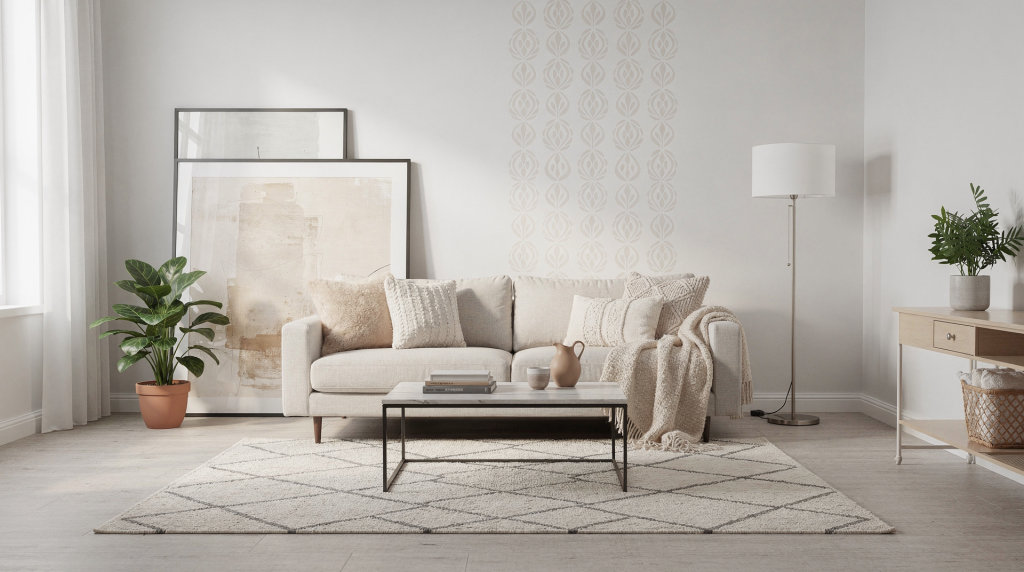
Renting doesn’t mean surrendering to a blank, forgettable box. But the line between a space that feels like yours and a deposit deduction is thinner than most people think. The safest approach is to treat every change as something you may need to undo: make reversible choices your default, document the original condition obsessively, and never skip written permission for anything permanent. In England, tenants are expected to get the landlord’s consent before decorating, and deductions can follow if alterations are made without approval or go beyond fair wear and tear.
Start with the one rule that protects your deposit
Before you buy paint, shelves, or curtain rods, open your tenancy agreement and check whether decorating is allowed at all. In many rentals, the real question isn’t whether the change looks good — it’s whether you can restore the property to its original condition when you leave. The practical rule is simple: if a change cannot be removed cleanly, assume it needs written approval first.
What landlords can and cannot deduct for
Landlords cannot keep your deposit for normal wear and tear — light scuffs, faded paint, the faint patina of everyday life. Those are expected. What they can claim for are damage, unauthorised alterations, or the cost of repainting a wall you turned deep teal without asking.
| Situation | Likely deposit outcome |
|---|---|
| A few small scuff marks from normal living | Usually not claimable as fair wear and tear |
| Several nail holes from hanging pictures | May be claimable if excessive or not reasonably repaired |
| Painting a wall without written permission | Risk of deduction for restoring the original finish |
| Using removable décor that leaves no damage | Usually the safest option |
| Causing stains, burns, or chips | Often claimable if repair is needed |
The safest decorating strategy: reversible first, permanent second
If you want style without deposit stress, build the room around choices you can take with you. This is especially useful in English rentals, where many tenancies restrict painting, wallpapering, panelling, or drilling without consent. A room anchored by a large rug, layered textiles, and freestanding furniture can feel completely transformed — yet leave zero trace when you move out.
Best renter-friendly upgrades
- Large area rugs to cover tired flooring and define zones — a wool flatweave under the dining table, a thick cotton dhurrie in the living area.
- Freestanding furniture instead of built-ins: a vintage sideboard or open bookshelf does the work without touching the walls.
- Command-style hooks and removable hanging systems where suitable — but always test on an inconspicuous patch first.
- Clip-on or tension curtain solutions that give you softness and privacy without drilling.
- Lamps, mirrors, and art leaned on shelves or mantels — a large mirror propped against the wall feels intentional, not temporary.
- Removable wallpaper or decals only if the landlord agrees — and even then, verify the product peels off cleanly from your specific wall surface.
- Slipcovers and textiles to change colour and texture quickly: a linen slipcover on a tired sofa, a quilt thrown over a basic bed frame.
These options work because they change the feel of the room without permanently altering fixtures or finishes. They’re also pieces you’ll likely reuse in your next home.
Best permanent changes only with permission
- Painting walls, trim, or doors.
- Wallpapering.
- Installing shelves into walls.
- Replacing handles, taps, or light fixtures.
- Adding panelling, arches, or other built-in features.
Even when a landlord is open to upgrades, get the approval in writing and keep a copy with your tenancy documents. A verbal “that sounds fine” won’t protect you during the final inspection.
How to ask for permission the right way
A clear, written request is the easiest way to avoid disputes later. Keep the message short, specific, and practical — show that you’re thinking about the property’s long-term condition, not just your own aesthetic.
Use this structure
- Say exactly what you want to change.
- Explain whether the change is reversible.
- State how you will restore the property at the end of the tenancy.
- Offer to use a contractor or materials the landlord prefers.
- Ask for written confirmation.
Example request
I’d like to paint the living room walls a neutral colour using professional paint and return the walls to their current colour before I move out if needed. Please let me know if this is acceptable, and if so, could you confirm your approval in writing?
That kind of message signals responsibility — it makes a yes far more likely.
How to decorate beautifully without drilling, painting, or breaking rules
A rental can feel deeply personal without touching the walls much at all. The trick is to layer texture, colour, and lighting until the architecture fades into the background.
1. Use textiles to change the room fast
Textiles do more work than many people expect. Curtains, throws, cushions, bedding, and rugs can soften a plain room, improve acoustics, and make a space feel intentional rather than temporary. Linen curtains, for instance, absorb sound and diffuse light in a way that instantly makes a room feel settled. A wool rug underfoot changes the entire sensory experience of a rental with cold laminate flooring.
Good combinations:
- Linen curtains + wool rug + cotton cushions for a calm, breathable look.
- Velvet cushions + patterned throw + warm lamp light for a cozier, more enveloping feel.
- Neutral sofa + strong rug + one statement throw for a balanced room where the eye has a clear place to land.
When choosing textiles, pay attention to weight and drape. Heavy linen hangs differently from thin cotton; a chunky knit throw reads as winter, while a light cotton quilt feels like summer. These shifts let you redecorate seasonally without storing anything permanent.
2. Add art without creating wall damage
If you want a gallery wall but don’t want repair costs later, consider:
- Picture ledges — they let you layer frames and swap pieces easily.
- Leaning framed prints on furniture: a large print on a sideboard, a smaller one on a desk.
- Adhesive hanging products only where appropriate and on surfaces that can tolerate them — always test first, as some can lift paint or leave residue.
- Large-scale art propped on the floor behind a sofa — this creates a focal point without a single nail.
Too many hooks, screws, or nails can become an issue at check-out if the wall needs filling and repainting. A few small picture hooks are usually considered normal use, but a cluster of twenty holes crosses into damage territory.
3. Improve lighting instead of changing the fixtures
Lighting has a bigger impact than most tenants expect. Use table lamps, floor lamps, plug-in wall lights, and warm bulbs to change the tone of the room without rewiring anything. A floor lamp placed in a dark corner can visually expand the space; a pair of bedside lamps with linen shades creates symmetry and softness. Aim for multiple light sources at different heights — overhead light alone is the quickest way to make a rental feel stark.
4. Bring in storage that also decorates
Open shelving, baskets, trunks, and sideboards can store clutter and act as design features at the same time. A woven basket next to the sofa holds throws and magazines; a vintage trunk serves as a coffee table and hides extra bedding. This keeps the space looking curated even if the architecture itself is basic.
A step-by-step plan for decorating a rental safely
Step 1: Read the tenancy agreement
Look for clauses about painting, wallpaper, shelving, nail holes, fixtures and fittings, and returning the property to its original condition. If the wording is unclear, ask before acting.
Step 2: Photograph the property before changes
Take clear, dated photos of walls, floors, ceilings, windows, and any existing scuffs. If a dispute arises later, the check-in and check-out condition matter a lot in deciding whether damage was caused during the tenancy.
Step 3: Choose reversible upgrades first
Start with items you can take with you: rugs, lamps, curtains, mirrors, freestanding storage, artwork. These form the backbone of a rental-friendly interior.
Step 4: Get written permission for anything permanent
If you want to paint, drill, or alter a fixture, don’t rely on a verbal yes. Written approval is what protects you if the property is checked at the end of the tenancy.
Step 5: Keep all receipts and product details
If you do make approved changes, keep paint colours, receipts, contractor invoices, and photos of the finished work. That evidence can help if there’s any disagreement about what was agreed or whether the work was done properly.
Step 6: Plan the move-out reversal in advance
If you altered something, think about how you’ll put it back. Repainting a wall, filling holes, or replacing a removed fixture can cost less if you plan for it early rather than scrambling at the last minute.
Common mistakes that lead to deposit deductions
- Assuming small changes don’t matter. Even modest alterations can become expensive if they need professional repair at the end of the tenancy.
- Painting first and asking later. This is one of the fastest ways to create a dispute. If the landlord didn’t agree, the cost of restoring the original decoration may be deducted.
- Using cheap adhesive products on the wrong surface. Some removable hooks and strips can still lift paint or leave residue. Always test carefully and follow the product’s weight and surface instructions.
- Overfilling walls with too many holes. A few picture hooks are usually part of normal living, but excessive screw or nail holes can move from wear and tear into damage.
- Forgetting to document the original condition. Without photos and a check-in record, proving that a mark or issue was already there becomes much harder.
Quick checklist before you decorate
- I have read the tenancy agreement.
- I know which changes need permission.
- I have photographed the current condition.
- I have chosen reversible options first.
- I have written approval for any permanent change.
- I know how I will reverse the change before moving out.
- I have saved receipts and product details.
Best low-risk decorating ideas by room
| Room | Smart rental-friendly updates |
|---|---|
| Living room | Rug, floor lamp, art ledge, cushion layering |
| Bedroom | Headboard alternative, blackout curtains, linen bedding, bedside lamps |
| Kitchen | Freestanding trolley, peel-and-stick only with permission, better storage jars |
| Bathroom | Towel ladder, non-drill shelving, matching accessories, mirror upgrade |
| Home office | Desk lamp, pinboard, rug, cable management, framed prints |
When to accept a plain room and save your money
Not every rental is worth a big decorating project. If you’re planning to move within months, the smartest move may be to keep changes minimal and focus on portable pieces you can reuse elsewhere. That’s especially true when the tenancy agreement is strict or the landlord is unlikely to approve upgrades.
A good rental interior often comes from restraint: a few strong textiles, decent lighting, and fewer but better objects. That approach looks intentional, travels well, and rarely causes deposit problems. A single beautiful throw on a basic sofa, a well-placed floor lamp, and a stack of art books on a side table can do more for a room than a rushed paint job ever could.
FAQ
Can a landlord take my deposit for decorating?
Yes, if you decorate without permission or cause damage that needs repair. They cannot deduct for normal wear and tear alone.
Do I need written permission to paint a rental?
Yes, if you want to stay safe. Written permission is the clearest way to avoid disputes at the end of the tenancy.
Is minor wall damage from picture hooks allowed?
A few small marks may be treated as normal use, but excessive holes or badly repaired damage can lead to deductions.
What is the safest way to personalise a rental?
Use reversible changes first: rugs, curtains, lamps, art, cushions, and freestanding furniture.
Will removable wallpaper always be safe?
No. It’s only safe if the landlord allows it and the product removes cleanly without damaging the surface. Always test a small corner first.
Final takeaway
The best way to decorate a rental without losing your security deposit is to think in layers: reversible first, permanent only with permission, and always documented. If you treat every change as something you may need to undo later, you can create a home that feels personal now and still pass the move-out inspection with far less risk. The goal isn’t to avoid decorating — it’s to decorate in a way that leaves the space exactly as you found it, while carrying your own story forward to the next place.