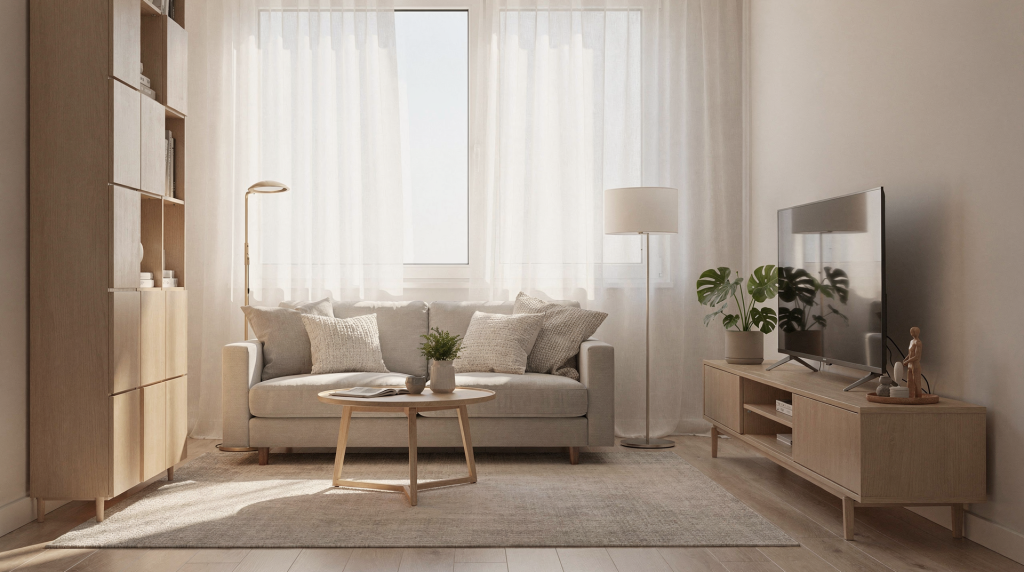
A small apartment doesn’t have to feel like a stopgap. With the right mix of layout, light, storage, and materials, even a compact home can read as deliberate, layered, and surprisingly generous. The trick is to stop measuring square footage and start measuring how the room actually works. In a tight space, every piece of furniture needs to pull double duty—saving space while adding character—and the layout should open up the apartment rather than pinching it.
What Makes a Small Apartment Feel Stylish Instead of Tight?
Small spaces almost always look better when they’re edited, not stuffed. That doesn’t mean stripping the room down to bare essentials for the sake of minimalism. It means choosing pieces with a clear purpose and making sure each one supports the whole room rather than fighting for attention.
The most common styling mistakes are easy to spot once you know what to look for:
- Furniture that’s simply too large for the room’s proportions
- Too many small accessories competing for visual attention
- Heavy curtains and dark finishes that swallow light
- Decor scattered everywhere instead of grouped into intentional moments
- Storage that hides clutter but looks bulky and out of place
Style in a small apartment comes from balance. You want enough visual interest to feel warm and lived-in, but enough breathing room that the space reads as calm rather than chaotic. That breathing room—the empty space between objects—is what lets each piece stand out.
Start With the Layout Before You Buy Anything
Before you bring in a single decorative object, study how the apartment functions day to day. Many small spaces feel awkward not because they’re small, but because the furniture plan is fighting the architecture. A sofa shoved against the wrong wall or a dining table blocking the natural walkway can make a room feel half its size.
Ask these practical questions:
- Where does natural light come from, and how does it move through the day?
- Which wall naturally anchors the main seating area without cutting off flow?
- Do you genuinely need a dining zone, a work zone, or both—and can one surface serve both?
- What paths do you walk through most often? Keep those clear.
- Which items need to stay accessible every single day, and which can live behind closed doors?
If a room has to serve multiple purposes, define those purposes clearly. In a studio or open-plan apartment, use rugs, lighting, and furniture placement to create distinct zones without building walls. The eye should be able to read “this is where I sit” and “this is where I sleep” without needing a floor plan.
Simple zoning tools that work:
- A sofa placed to separate living and sleeping areas—float it away from the wall if you can
- A bookshelf used as a visual divider, open enough to let light pass through
- A dining table that doubles as a desk, ideally with a slim profile
- A rug that anchors one area without closing off the room; make sure it’s large enough that at least the front legs of furniture sit on it
- A curtain or screen for a temporary privacy layer—ceiling-mounted tracks keep the line clean
The goal isn’t to chop the apartment into tiny fragments. It’s to give each area a clear role so the space feels organized rather than jumbled.
Choose Furniture With Light Visual Weight
In a small apartment, bulky furniture is the fastest way to make the room feel overloaded. Pieces with visible legs, open bases, and slimmer silhouettes tend to look lighter, even if they’re not physically smaller. That visual gap between the floor and the bottom of a sofa or console lets light travel underneath, which tricks the eye into reading more space.
Better furniture choices for compact spaces:
- Sofas with raised legs—even a few inches of clearance makes a difference
- Accent chairs with open frames, like a cane-back or metal sled base
- Nesting tables instead of one oversized coffee table; they tuck away when not in use
- Ottomans with hidden storage that can serve as extra seating or a footrest
- Narrow consoles instead of deep cabinets—think 12–14 inches deep rather than 18
- Extendable or drop-leaf dining tables that adapt to daily needs
Avoid these common mistakes:
- Overstuffed seating that dominates the room visually and physically
- Boxy media units with no visual break—a low, open shelf often works better
- Matching furniture sets that make the room feel flat and catalogue-like
- Overscaled dining chairs that block circulation; armless chairs save precious inches
- Beds with thick frames that eat into floor space—a simple platform or frame with slim legs gives you back square footage
If you’re unsure, step down one size from what feels safe. Many small apartments look better with slightly smaller pieces than with standard full-size furniture. A 72-inch sofa instead of an 84-inch one, for example, can open up a living area without sacrificing comfort.
Use Storage That Blends Into the Decor
Storage is non-negotiable, but in a small apartment it should disappear visually whenever possible. The most successful solutions solve clutter while still looking intentional—like they were part of the design from the start, not an afterthought.
Best storage ideas for small apartments:
- Beds with drawers underneath—ideal for out-of-season clothing or extra linens
- Ottomans that open for blankets, books, or tech accessories
- Floating shelves for display and utility; they draw the eye up and keep floors clear
- Wall-mounted cabinets in tight areas like bathrooms or entryways
- Decorative baskets for loose items—think throws, toys, or mail
- Entryway hooks for bags and coats; a row of hooks takes up zero floor space
- Bins that fit under consoles or benches—measure the clearance first
Storage works best when it’s grouped by category. Put the same kind of objects in the same place instead of scattering them around the apartment. That way, you’re not hunting for batteries in three different drawers.
A useful rule:
If an item is used daily, keep it easy to reach—eye level or within arm’s reach. If it’s used occasionally, store it higher, lower, or farther out of sight. That simple rule keeps the room tidy without turning it into a storage unit.
Make the Most of Light
Light has a direct, almost physical effect on how spacious a small apartment feels. The more light you preserve and reflect, the more open the room will seem. This isn’t just about brightness; it’s about how light moves through the space and defines its edges.
Ways to improve light in a small space:
- Keep window treatments light and simple—sheer linen or cotton lets daylight through while softening the view
- Hang curtains high and wide to make windows feel larger; mount the rod close to the ceiling and extend it past the frame
- Use mirrors to reflect daylight; a large mirror opposite a window can double the perceived light in a room
- Choose finishes that don’t absorb too much light—matte surfaces can feel cozy, but a little sheen on a lamp base or side table helps bounce light around
- Layer lighting so the room works after dark; a single overhead fixture often leaves corners in shadow
Lighting layers to include:
- Ambient lighting for overall brightness—think ceiling fixtures or wall-mounted uplights
- Task lighting for reading, working, or cooking—adjustable arms are your friend
- Accent lighting for atmosphere—a small picture light over art or a warm LED strip under a shelf
A small apartment with only one central overhead light often feels flat and uninviting at night. Add table lamps, sconces, or a floor lamp to create depth and warmth. In a bedroom, wall-mounted sconces free up nightstand space and give you focused light exactly where you need it.
Use Color Strategically, Not Fearfully
You don’t have to paint everything white to make a small apartment feel larger. A restrained palette usually works best, but that palette can still have personality. The key is consistency: repeating colors in different parts of the apartment creates a visual thread that makes the whole space feel cohesive.
Good color strategies:
- Use one main neutral base—warm white, soft greige, or a light sand tone
- Add one or two accent colors and use them in small, deliberate doses
- Repeat colors in different parts of the apartment—a cushion, a piece of art, a vase
- Keep large furniture quieter, then use textiles for contrast and energy
Light colors reflect more light, but darker colors can work beautifully if they’re used with intent. A deep painted wall, for example, can make a small bedroom feel cozy rather than cramped if the rest of the room is simple and well lit. The dark wall recedes visually, which can actually add depth.
Color combinations that tend to work well:
| Base Palette | Accent Direction | Effect |
|---|---|---|
| Warm white + sand | Olive, terracotta, black | Soft and grounded |
| Pale gray + oak | Navy, brass, charcoal | Calm and tailored |
| Cream + beige | Rust, forest green, muted blue | Warm and layered |
| Greige + walnut | Ink, ivory, brushed metal | Sophisticated and compact |
The point isn’t to stay bland. The point is to keep the palette controlled so the apartment feels intentional rather than busy.
Style With Textiles to Add Warmth and Personality
Textiles are one of the easiest ways to make a small apartment feel finished. They soften hard edges, add color, and make basic furniture look considered. In a rental where you can’t change the walls or floors, textiles do the heavy lifting.
Use textiles here:
- Throw blankets on sofas and beds—a linen or wool throw draped over an arm adds instant texture
- Cushions in varied textures, not just matching sets; mix linen, boucle, and a subtle pattern
- Rugs that define zones and add softness underfoot—a flatweave can work in high-traffic areas, while a higher pile adds warmth
- Curtains that frame windows cleanly; unlined linen lets light through while still offering privacy
- Upholstery or slipcovers that make older pieces feel intentional—a slipcover in a natural fabric can unify mismatched chairs
Texture matters as much as color. Linen, wool, boucle, cotton, and woven materials create interest without adding clutter. The eye reads texture as depth, which makes a small room feel richer.
Practical textile tip:
Don’t use too many competing patterns in a small apartment. One strong pattern is usually enough. If you want more than one, vary the scale—pair a large-scale floral with a small stripe, for example—and keep the colors related. That way, the patterns talk to each other instead of shouting.
Make Walls Work Harder
When floor space is limited, the walls should help carry the design. Vertical storage and wall-mounted pieces free up room while adding structure. This is especially useful in studios and one-bedroom apartments where every inch of floor matters.
Good wall-based ideas:
- Floating shelves—install them at varying heights for a collected look
- Wall sconces—they eliminate the need for table lamps and free up surface space
- Mounted bedside lights—adjustable arms let you direct light for reading
- A wall desk or fold-down work surface—perfect for a laptop station that disappears when not in use
- Hanging art in a deliberate grouping—a gallery wall draws the eye up and adds personality without taking up floor space
- A mounted TV instead of a media stand—this alone can reclaim several square feet
Wall-mounted lighting near the bed, for example, can replace bulky lamps and clear valuable surface space on a nightstand. In a tiny kitchen, a wall-mounted rail for utensils keeps counters clear.
Bring in Personality Without Creating Clutter
A stylish apartment should feel personal, not staged. The challenge is adding character without collecting too many objects. The best small spaces feel curated, not cluttered—each item earns its place.
Better ways to add personality:
- Choose a few meaningful art prints—one large piece can anchor a wall better than a cluster of small ones
- Mix one or two vintage pieces with newer furniture; a vintage mirror or side table adds history
- Use a distinctive mirror or lamp as a focal point—something with an interesting shape or finish
- Display books you actually love; a stack of books on a coffee table or shelf feels personal and approachable
- Group objects in small, intentional clusters—three items on a tray often look more deliberate than ten scattered across a surface
Instead of scattering decor across every surface, create moments. One styled shelf, one framed artwork, one beautiful tray on a coffee table can say more than ten random accessories.
A good editing test:
If you removed half the decorative objects in the room, would the apartment still feel styled? If the answer is no, there’s probably too much visual noise. The remaining pieces should be strong enough to carry the room on their own.
Small Apartment Decorating Ideas by Room
Living room
- Use a sofa with slim arms and raised legs—look for a depth that doesn’t overwhelm the room
- Choose a round or nesting coffee table; round tables are easier to navigate around in tight spaces
- Keep the rug large enough to anchor the seating area—at least the front legs of the sofa and chairs should sit on it
- Add one strong lamp instead of several bulky ones; a floor lamp with an arched arm can provide both ambient and task light
- Use one focal wall for art or a mirror—let that wall do the talking
Bedroom
- Pick a bed frame that doesn’t overpower the room—a simple upholstered headboard or a low-profile platform frame
- Use wall sconces or pendant lights instead of table lamps to free up nightstand space
- Keep the bedside setup minimal: a small tray for essentials, a book, and a lamp
- Add softness with bedding and one throw—layering a quilt or coverlet with a duvet adds texture
- Use under-bed storage for off-season items; vacuum-sealed bags maximize space
Kitchen
- Keep counters as clear as possible—store appliances you don’t use daily in cabinets
- Use open shelving sparingly; it works best for items you use often and want to display neatly
- Add a slim cart if you need extra prep space; a butcher-block top on wheels can be tucked away when not in use
- Store daily items where they’re easiest to reach—mugs near the coffee maker, spices near the stove
- Use matching containers for pantry basics; uniform jars make even a small pantry feel organized
Entryway
- Add hooks for coats and bags—a row of hooks at different heights works for all family members
- Use a narrow bench or shelf; a 10-inch-deep console can hold keys and mail without blocking the path
- Include a tray for keys and small essentials—it contains the clutter in one spot
- Keep shoes contained in one zone; a low basket or a slim shoe cabinet keeps them off the floor
- Use a mirror to bounce light and help with quick checks before leaving—a full-length mirror can also make the entry feel larger
Budget-Friendly Upgrades That Make a Big Difference
You don’t need a full renovation to improve a small apartment. Small, high-impact changes often matter more than expensive furniture. These are the upgrades that shift how a room feels without shifting your budget.
Smart upgrades:
- Replace heavy curtains with lighter ones—even swapping out dark rods for slim metal ones helps
- Swap oversized lamps for wall sconces; plug-in sconces don’t require an electrician
- Add a larger rug to define the room; a rug that’s too small can make the space feel choppy
- Reframe art or create a better gallery arrangement—sometimes just changing the mat or frame makes a piece feel new
- Paint a single wall or piece of furniture; a fresh coat of paint on a dresser or an accent wall can transform the room
- Change hardware on cabinets and drawers—new knobs or pulls in a warm metal finish add polish
Checklist: How to Style a Small Apartment Well
- Define the function of each area
- Keep furniture scaled to the room
- Use light to create openness
- Add storage that hides clutter
- Choose a controlled color palette
- Layer textures for warmth
- Use walls to save floor space
- Edit decor instead of filling every surface
- Repeat materials and colors for cohesion
- Leave enough empty space for the eye to rest
Common Mistakes to Avoid
| Mistake | Why It Hurts the Space | Better Approach |
|---|---|---|
| Oversized furniture | Makes the room feel crowded and hard to navigate | Choose slimmer silhouettes with visible legs |
| Too many tiny decor items | Creates visual clutter and feels unfocused | Use fewer, larger accents grouped intentionally |
| Dark, heavy window treatments | Blocks light and makes the ceiling feel lower | Use light curtains hung high and wide |
| Pushing everything against the walls | Can make the room feel awkward and unanchored | Float furniture when possible to create flow |
| Ignoring vertical space | Wastes usable storage and leaves walls bare | Add shelves, hooks, and wall lighting |
| Matching everything too closely | Feels flat and generic, lacking personality | Mix finishes and textures carefully |
A Simple Step-by-Step Styling Process
1. Clear the room
Remove extra furniture and objects so you can see what the apartment actually needs. A blank slate helps you spot the natural focal points and problem areas.
2. Place the largest pieces first
Start with the sofa, bed, dining table, or desk. These define circulation and set the scale for everything else. Live with the arrangement for a day before committing.
3. Add storage
Solve practical needs before decorating. Hidden storage comes first—baskets, bins, and furniture with built-in compartments. Once clutter has a home, the room feels calmer.
4. Layer lighting
Make sure each zone has usable light, not just one overhead source. Add task lighting where you read or work, and ambient light to soften shadows.
5. Introduce textiles
Add rugs, curtains, cushions, and throws to soften the room. These layers bring warmth and texture, making the space feel finished.
6. Finish with art and decor
Use a few strong pieces instead of many small ones. Hang art at eye level, group objects on trays, and step back to see if the room still breathes.
FAQ
How do I make a small apartment look stylish without spending a lot?
Focus on layout, lighting, and textiles first. A better rug, improved curtains, and a more intentional furniture arrangement often change the room more than new decor. Rearranging what you already own costs nothing and can reveal a completely different feel.
What colors make a small apartment look bigger?
Light neutrals usually help reflect light and make rooms feel more open. That said, deeper colors can work well when they’re balanced with light surfaces and good lighting. A dark accent wall, for example, can add depth without shrinking the room if the other walls remain light.
Should I use mirrors in every small room?
No. One well-placed mirror is usually enough. Use it where it can reflect daylight or expand the visual depth of a room—opposite a window or at the end of a narrow hallway. Too many mirrors can feel disorienting.
Is open shelving a good idea in a small apartment?
Yes, if it’s edited carefully. Open shelving works best for items you use often or want to display neatly—like a curated collection of ceramics or glassware. If it becomes cluttered, it has the opposite effect and makes the space feel messy.
What is the easiest way to make a studio apartment feel bigger?
Create clear zones with rugs, lighting, and furniture placement. A studio feels more spacious when it reads as organized rather than all one undivided room. Use a bookshelf or a curtain to separate the sleeping area, and keep the visual lines open.
Final Thoughts
Small apartment decorating isn’t about pretending the space is larger than it is. It’s about making every square foot earn its place. When furniture is scaled properly, storage is concealed, lighting is layered, and decor is edited with care, even a modest apartment can feel stylish, personal, and calm.
The best results come from restraint with intention. Choose pieces that do more than one job, keep the layout clear, and let texture, light, and a few strong details carry the atmosphere. A well-styled small apartment doesn’t shout for attention—it simply works, beautifully.